Complete Guide to Drone Technology: Types, Uses & Industry Insights
What Is Drone Technology?
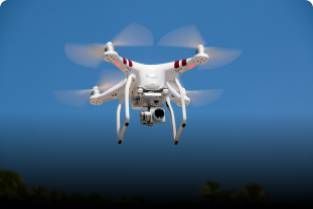
Drone technology refers to the integration of hardware, software, sensors, and control systems that enable an unmanned aircraft to operate, navigate, and perform specific tasks. A standard drone system typically consists of:
- An airframe with propulsion components
- Flight control software
- Navigation and positioning sensors
- Communication systems
- Payloads such as cameras, thermal imaging devices, or spraying tools
Modern drones often include automation features, allowing them to follow pre-defined flight paths and collect data with minimal manual intervention.
Benefits and Limitations of Drone Technology
Key Benefits
- Improved Safety: Reduces the need for human involvement in hazardous or hard-to-reach environments
- High Data Accuracy: Advanced sensors provide precise imaging and measurements
- Time Efficiency: Covers large areas much faster than traditional methods
- Cost Control: Can lower long-term operational expenses
- Remote Accessibility: Enables monitoring and inspection in challenging terrain
For instance, industrial drone inspection allows infrastructure like bridges, power lines, and factories to be assessed without interrupting operations.
Limitations to Consider
- Regulatory Constraints: Drone usage is governed by varying regional laws
- Limited Battery Life: Flight duration is often restricted
- Weather Sensitivity: Performance can be affected by wind, rain, or extreme temperatures
- Data Management Needs: Large volumes of data require secure handling and storage
- Skill Requirements: Proper training is necessary for safe and compliant operation
Understanding these factors helps set realistic expectations when implementing drone solutions.
Types and Categories of Drones
Drones can be classified based on their design and intended use:
Multirotor Drones
- Capable of vertical takeoff and landing
- Commonly used for inspections and aerial photography
- Widely applied in construction and public safety
Fixed-Wing Drones
- Offer longer flight durations
- Ideal for large-scale mapping and surveying
- Frequently used in agriculture and environmental monitoring
Hybrid VTOL Drones
- Combine features of multirotor and fixed-wing systems
- Suitable for long-range industrial operations
Automated and Self-Flying Drones
Automated drone systems use GPS and onboard sensors to follow pre-programmed routes. While often described as self-flying drones, they still require human supervision. Automation enhances consistency and is especially useful for inspections and surveying tasks.
Key Use Cases Across Industries
Industrial Drone Inspection
Used in sectors such as energy and manufacturing, drones equipped with advanced sensors can detect faults, corrosion, and heat variations without direct contact.
Public Safety Applications
Drones assist in:
- Search and rescue missions
- Disaster assessment
- Traffic monitoring
- Emergency response coordination
They enable faster decision-making while reducing risk to personnel.
Construction and Infrastructure Monitoring
Drones are used to monitor project progress, conduct surveys, and maintain documentation, improving planning and communication.
Agriculture and Field Spraying
Field spray drones enable precise application of fertilizers and pesticides, reducing waste and improving crop management.
Automated Flight Operations
Automation supports:
- Routine inspections
- Repetitive surveys
- Scheduled asset monitoring
This reduces manual workload and improves data consistency.
Latest Trends and Innovations in Drone Technology
Drone systems continue to advance with developments such as:
- Greater automation and autonomy
- AI-based obstacle detection and avoidance
- Enhanced battery performance
- Integration with cloud-based platforms
- Expanded use of thermal and multispectral sensors
These trends indicate a shift toward more specialized, reliable, and application-focused drone solutions.
Key Features to Consider in Drone Systems
Technical Considerations
- Flight duration and battery capacity
- Payload and sensor compatibility
- Camera and imaging quality
- Navigation accuracy
- Automated flight capabilities
- Data storage and security
Operational Factors
- Ease of maintenance
- Software support and updates
- Training requirements
- Compliance with regulations
For industrial and safety applications, reliability and system redundancy are often more important than speed or design.